Forty two years ago, in May 1984, the late Tina Turner released the chart topping hit, “What’s Love Got to Do with It?” The song earned her several accolades namely, Record of the Year, Song of the Year, and Best Female Pop Vocal Performance at the 27th Annual Grammy Awards. My mother has some pretty stunning legs and I nicknamed her Timmy Turner; Timmy being the short form of Ti-mummy (don’t ask) and Turner after Tina Turner’s world famous legs.

Let’s take it from the top: what is COP in the first place? COP stands for Conference of Parties, the annual meeting of the countries that signed the United Nations Framework Convention on Climate Change (UNFCCC). It is where governments negotiate how the world will respond to the climate crisis, while farmers, young people, scientists and civil society gather around them to make sure the outcomes reflect real lives.
In November 2024, I travelled to Azerbaijan for COP29 in Baku, where I took part in discussions on nature-based solutions for climate action and in sessions examining urbanization, transportation and tourism within the context of food systems. Those conversations reminded me that a food system is never only about farms. It runs through our cities, our roads and our livelihoods all at once.
The headline outcome from Baku was a new climate finance goal, with developed countries committing to lead in mobilizing at least 300 billion dollars a year by 2035, within a wider aspiration of 1.3 trillion dollars from all sources. Many of us from the African continent felt the figure fell short of the need. Still, I choose to see it as a number we now have the power to hold governments accountable to. The smallholder farmer in Kenya who watches the rains grow less predictable each season is the person for whom those numbers must eventually become seeds, water, insurance and fair access to markets.
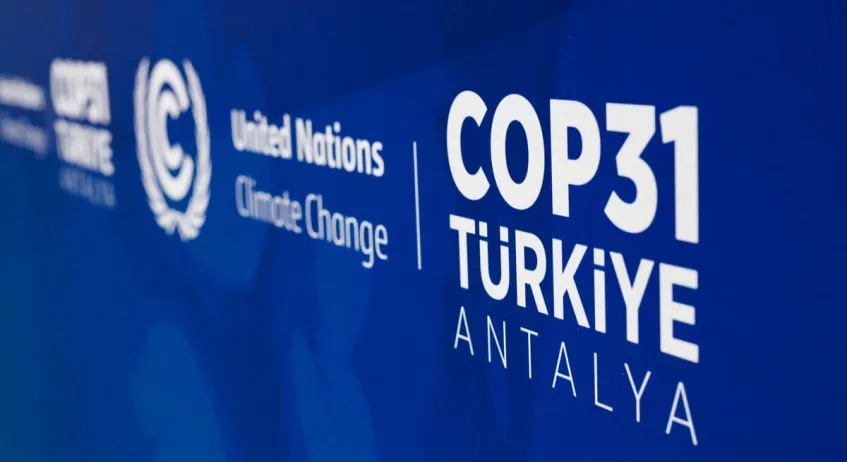
Which brings us to now. COP31 opened in Antalya, Türkiye on 9 November, and it closes on Friday, 20 November. This year’s programme includes a dedicated Food, Agriculture and Health Day, a sign that the link between what we grow and how we live is finally being said out loud. The biodiversity talks that ended in Yerevan last month fed into the same conversation, because the soil, pollinators and wetlands our farmers depend on are the nature everyone keeps promising to protect.
But the formal negotiations have delivered a hard lesson for those of us who care about food. The Sharm el-Sheikh work on agriculture and food security, the UNFCCC’s first dedicated agriculture track, made no real progress in Antalya, and a process meant to end this year now stretches into 2027, as Devex reported. It will resume either at the Bonn talks in June or at COP32 in Addis Ababa in November. Many of us had hoped a clearer mandate would steer more climate finance toward farmers in the countries hit hardest. For now, that door has only been left ajar.
The other fight is over adaptation finance, which is where farmers feel climate change first. A draft decision released on Monday calls for tripling annual adaptation finance for developing countries to at least 120 billion dollars by 2035, and proposes an “Antalya-to-Addis Ababa Roadmap” on adaptation and resilience finance. That matters to us, since the next COP will be on African soil. Yet African countries’ push to triple adaptation finance was initially left off the official agenda, which tells you how hard this money is to win, even after it has been promised.
So what has COP got to do with it? Everything on our plates, and a good deal more than the numbers currently reflect. The Climate Policy Initiative found that a mere 0.8 percent of climate finance, roughly 5.5 billion dollars, reaches the small-scale farmers and small agribusinesses who feed much of the developing world.
The encouraging part is that this is a gap of choices, not of capacity. Ministers are in the room this week, and there is still time to turn agriculture from an afterthought into a decision. If Antalya sends adaptation finance to the women, youth and smallholders who feed us, and keeps the food talks alive on the road to Addis Ababa, COP will have answered the question in its own title by showing up at every family’s table.
Amanda Namayi


Leave a Reply