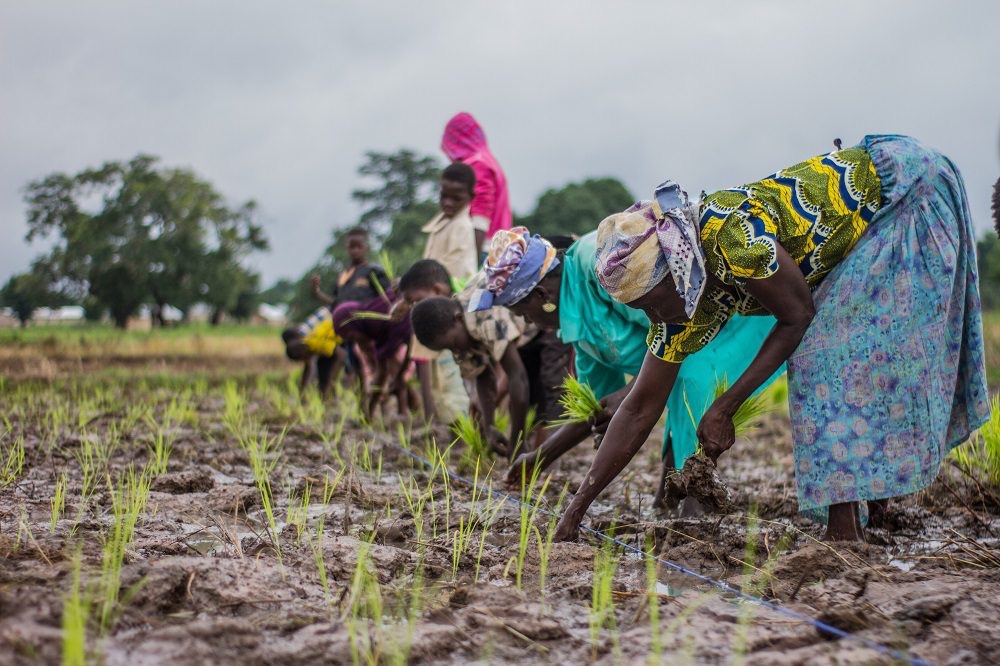
The pursuit of sustainable development in global agriculture relies on a foundational truth, that long-term food security is impossible without the active empowerment of women smallholder farmers.
Institutional data from the Food and Agriculture Organization highlights the immense scale of this demographic, revealing that women comprise roughly 49 percent of the total agrifood workforce across sub-Saharan Africa. Furthermore, within the continent, approximately 76 percent of employed women find their livelihoods within agrifood systems, representing the highest regional concentration of female agricultural labor in the world. These figures underscore that women are the structural backbone of African production, making the optimization of development strategies a matter of global economic survival.
Institutional actors recognize this imperative, which has prompted the creation of sophisticated gender-responsive scaling frameworks designed to ensure that agricultural innovations reach and benefit women equitably. These models serve an essential purpose by providing clear principles and establishing baseline metrics for inclusivity. However, an enduring challenge in the development sector is the complex transition from strategic design to practical execution. The real test of any conceptual model does not occur during its formulation, but rather when it encounters the multi-faceted realities of the rural communities it aims to serve.
During the CGIAR Scaling Week in Nairobi, I had the privilege of moderating a dedicated session titled “From frameworks to farms: Making gender-responsive scaling work for smallholder women.” We brought together researchers, funders, and grassroots practitioners to examine this exact operational space. Our conversation focused heavily on exploring the systemic friction that occurs when high-level strategies meet last-mile implementation. Rather than viewing frameworks as definitive solutions, our panel examined them as living blueprints that must constantly adapt to localized socioeconomic constraints. The discussion highlighted a collective understanding that bridging the execution gap requires looking beyond technical project parameters to understand the real-world environments of female smallholders.

Steering a room of diverse stakeholders requires addressing the practical friction points where good intentions encounter systemic hurdles. In structuring this dialogue, I wanted to focus heavily on operational truth, encouraging our panelists to dissect the space where theoretical design meets field reality. The discussion highlighted that gender integration is not an administrative checklist to be completed during project design, but an active, iterative process that demands continuous recalibration. By anchoring our conversation in field diagnostics rather than abstract ideals, we explored how researchers and funders can better support practitioners who navigate these complex social landscapes every day.
Empirical evidence from recent peer-reviewed literature supports the need for this adaptive approach to scaling. A comprehensive study evaluated agricultural interventions across diverse sub-Saharan African contexts, noting that gender-focused projects achieve maximum efficacy when they move beyond superficial participation metrics and address systemic barriers. For instance, a framework might successfully guide the distribution of climate-resilient seed varieties to female cooperative members, satisfying an immediate institutional requirement. However, as the research points out, if localized structural constraints like restricted credit access or insecure land tenure remain unaddressed, women may struggle to secure the complementary inputs needed to optimize their harvests. Our session emphasized that acknowledging these structural realities allows us to refine our scaling pathways, ensuring that project designs account for the broader ecosystem in which smallholders operate.
Our panel brought distinct, complementary perspectives to the table, mapping out the precise touchpoints where execution can stall or succeed. Ashley Mutiso, serving as a Gender and Inclusive Innovations Consultant, focused on the structural design of these initiatives. She emphasized that frameworks often overlook the intersectional realities of rural women, treating them as a monolithic demographic group rather than individuals with varying levels of resource access based on age, marital status, and economic standing.
Addressing the practical realities of project ownership, Dr Erin McGuire, Director of Responsible Innovations, highlighted the critical role of institutional design. Her insights centered on how research organizations and funders can build flexibility into their funding mechanisms, allowing project teams to pivot when early field data reveals unexpected social dynamics. This perspective was closely complemented by Rashmi Ekka, Director of Sal Collective Limited, who provided a vital grassroots practitioner viewpoint. Ekka focused on the realities of community engagement, illustrating how top-down strategies frequently underestimate the time and trust required to build genuine, sustainable adoption among women smallholder farmers who are risk-averse for very practical economic reasons.
A major dimension we examined during the discussion is the impact of cultural norms on the division of labor and income control within farming households. Research indicates that agricultural innovations can alter domestic dynamics in unexpected ways. When a crop traditionally managed by women shifts from a subsistence resource to a highly profitable commercial enterprise, male household members often take over the marketing and financial management. This shift can inadvertently increase the physical labor burden on women without delivering a corresponding increase in financial agency. Our panelists emphasized that successful scaling requires continuous field monitoring to track how resource distribution affects intra-household dynamics, allowing teams to adjust implementation strategies in real time before unintended imbalances occur.
The concept of time poverty also emerged as an essential factor in determining whether a framework succeeds on the ground. Data reveals that women smallholder farmers consistently navigate severe time constraints due to the dual demands of agricultural production and unpaid domestic labor. When a development framework introduces labor-intensive conservation or management practices without introducing corresponding labor-saving technologies, the adoption rate frequently drops. This outcome does not reflect a flaw in the technology itself or a lack of interest from the community; rather, it reflects a practical conflict with the finite time available to a female farmer. Recognizing these daily operational realities helps designers create more realistic timelines and integrate supportive tools that make adoption viable for the end user.
Ultimately, the insights shared by our panel underline the value of collaborative learning between institutional strategists and frontline practitioners. Initiatives achieve substantially more durable outcomes when local communities possess the agency to co-design project parameters from the beginning. This collaborative approach transforms frameworks from rigid mandates into flexible mechanisms that encourage local innovation. By fostering spaces where researchers, funders, and practitioners can openly share field diagnostics and operational hurdles, the agricultural sector can cultivate a more resilient development ecosystem.
If we are genuinely committed to transforming our food systems, we must stop treating compliance as an achievement. True progress requires the humility to listen to the field, the flexibility to adjust in real time, and the courage to ensure that our frameworks serve the actual lives of the women farming on the ground.


Leave a comment